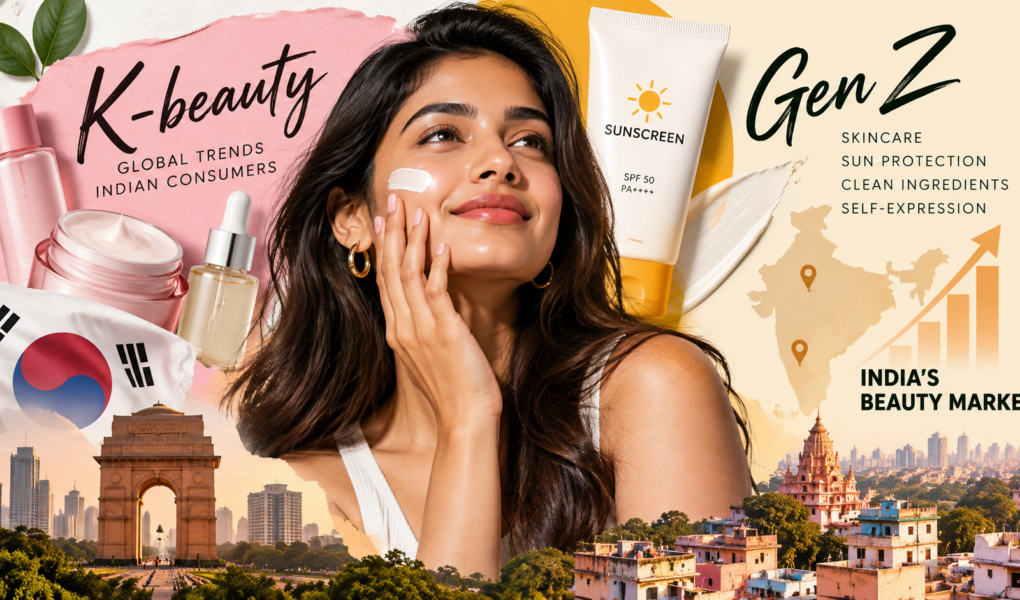
A Myntra report finds Gen Z is driving demand for K beauty and sunscreen beyond metros, with shoppers in tier-2 and tier-3 cities shaping India’s beauty market.
India’s beauty market is no longer being shaped exclusively by consumers in major metropolitan centers. Younger shoppers in tier-2 and tier-3 cities are influencing product demand, skincare routines and the growth of international beauty trends, particularly K beauty and sun protection.
According to Myntra’s Beauty in the Age of Gen Z report, prepared with RedSeer, half of the Gen Z beauty buyers on its platform come from tier-2 and tier-3 cities. The findings point to a shift in where beauty demand is emerging and how brands can reach a wider consumer base.
The report estimates that India’s beauty and personal care market could expand from approximately $23 billion to $40 billion by 2030. As younger consumers become more influential, product discovery, ingredient awareness and access to international brands are shaping the next phase of market growth.
K-beauty Demand Records Strong Growth
K beauty has become a significant part of this shift. The report indicates that demand for Korean beauty products on Myntra increased by 200% year on year, while searches grew by more than 300%.
The platform now lists over 1,000 products from more than 90 Korean brands, reflecting the expanding availability of Korean skincare to Indian consumers.
The appeal extends beyond the popularity of individual products. Korean beauty has helped bring a wider range of skincare formats and routines into consumer conversations, including serums, toners and targeted treatments. For brands and retailers, this creates opportunities to engage consumers who are exploring international formulations and incorporating them into their everyday routines.
The trend also highlights the importance of making product information accessible, helping shoppers understand ingredients, product formats and their intended use.
Sunscreen Moves into Everyday Skincare
Sun protection is another category gaining traction among Gen Z shoppers. The report recorded a 60% year-on-year increase in purchases of sun-protection products.
Search behaviour also points to more specific consumer preferences. Searches for spray sunscreens rose by 80%, ingredient-led sunscreens by 70%, and tinted sunscreens by 60%.
These trends suggest that consumers are looking beyond basic sun protection to consider texture, formulation and ease of use. Gel-based, fragrance-free and non-sticky formats are among the preferences identified in the report.
For beauty brands, the opportunity lies in understanding these product preferences and communicating formulation benefits clearly. For retailers, the findings underline the importance of offering a range of formats that address different consumer needs.
Why Tier-2 and Tier-3 Cities Matter
One of the report’s key findings is the growing contribution of consumers outside India’s largest cities. Locations including Ludhiana, Patna, Bhopal, Indore, Guwahati, Surat, Varanasi and Imphal are emerging as important markets for beauty discovery and purchases.
The findings indicate that access to products and information is helping broaden the market. Online retail gives consumers access to brands and categories that may not be readily available through local retail outlets.
The report also identifies ingredient transparency, affordable trial sizes and creator-led product discovery as factors influencing consumer choices. Together, these developments create opportunities for brands to connect with new audiences without relying solely on traditional metro-focused strategies.
For businesses, this means that regional markets need to be considered as distinct growth opportunities, with product availability and consumer communication aligned to local demand.
Gen Z’s Growing Influence on Beauty Spending
The report also highlights the spending power of younger consumers. According to Myntra, Gen Z allocates a 75% higher share of its spending to beauty and personal care than other consumer groups on the platform. Its average spend per customer has also increased by 1.2 times year on year.
These findings point to a consumer group that is increasingly influential in shaping beauty categories and product preferences.
For brands, the implications extend across product development, distribution and marketing. Ingredient-led communication, access to smaller trial formats and credible creator recommendations can help consumers discover products and make informed choices.
At the same time, the growing demand for international beauty products presents an opportunity for Indian brands to strengthen their own positioning through relevant formulations, clear product information and a better understanding of regional consumer needs.
What Does This Mean for India’s Beauty Industry?
The growing interest in K beauty and sunscreen reflects a broader shift in India’s beauty market: demand is expanding geographically, while consumers are exploring more specialised products and skincare formats.
The Myntra report suggests that growth opportunities are no longer concentrated in metropolitan markets. Tier-2 and tier-3 cities are contributing to category expansion, while younger shoppers are influencing how products are discovered and purchased.
For beauty brands, manufacturers and retailers, the next phase of growth will depend on understanding these changing preferences, improving access and building consumer trust. As K beauty and sun protection gain traction, the larger opportunity is to respond to a more diverse and informed consumer base across India.
Source: The Week Digital, based on its report published on 24 October 2026.